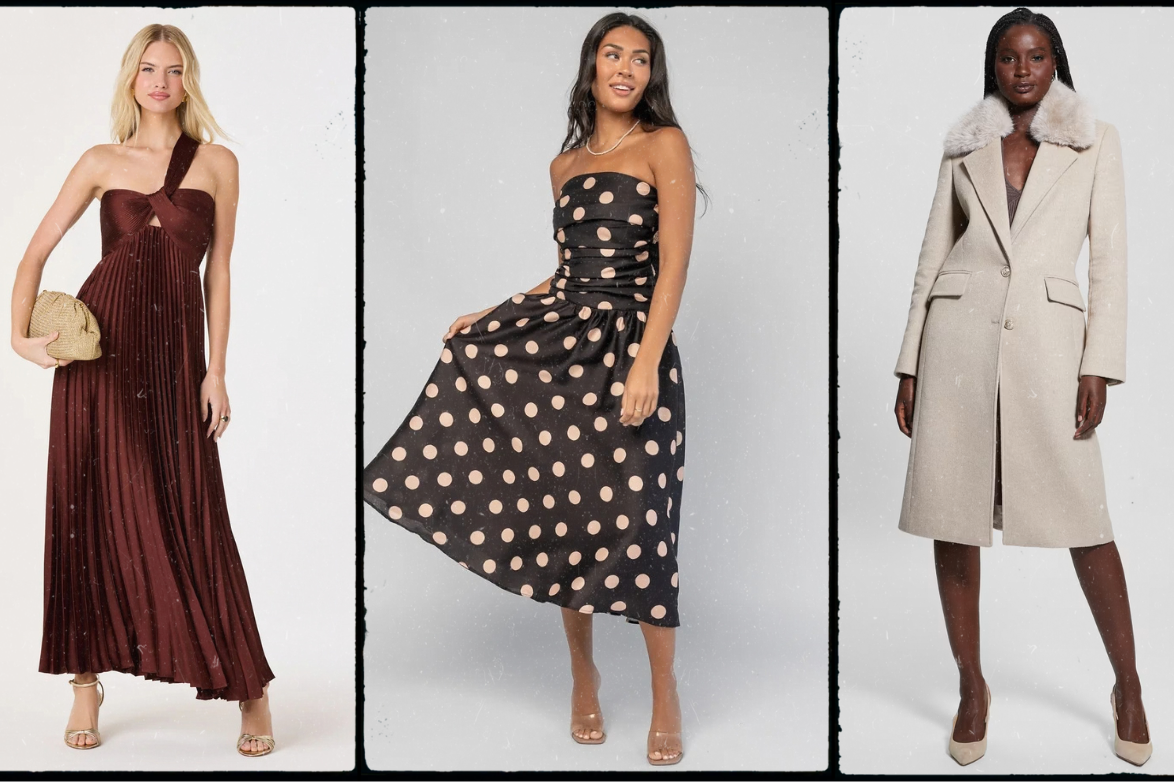
Whether it is familial ties, activism within her brand, or designing with her customers in mind, Megan Kinney has spent her career working for women and by women. At a time when more women are breaking limits and pushing past glass ceilings, empowerment feels more necessary than ever.
The alignment between Megan’s personal values and her brand, Meg, feels genuine throughout her journey in the fashion industry. With hashtags like #EmpowHer circulating on social media, Megan makes a deliberate effort to uplift women through both her designs and her company’s mission.
For many designers, their introduction to the industry begins in the classroom of a dream college. For Megan, that education started much earlier, growing up with a mother and grandmother who owned shops in her hometown in Canada. When she later founded Meg, Megan drew directly from her mother’s work ethic. She worked hands-on in stores, folding and organizing inventory and stepping in to make sales. The lessons she learned from both her mother and grandmother stayed with her.
“My mom managed to work every single day, come home, and make some experimental dinner for all of us to eat,” Megan recalled. “It’s ironic to think about how women worked back then. They held a full-time job, ran a business, took on full responsibility at home, and no one did a very good job of dividing roles. Watching that as a child, seeing women take hold of their ambition, make money, and experience something independent of family, made it feel normal. I didn’t even question it until I was older.”

Alongside the influence of the women in her life, Megan went on to study fashion at the Fashion Institute of Technology in New York. Like many students, she felt the coursework did not fully reflect the realities of working in the fashion industry. She was eager to begin designing and building her brand.
She recalls relying heavily on the network of friends and mentors she met through FIT’s diverse creative community. At just 22 years old, Megan designed her first collection with the help of fellow students from a range of disciplines, including photography, makeup artistry, hairstyling, and modeling.
“I had all these people who helped me put together my look book for a 12-piece collection,” Megan said. “Everyone was just saying, ‘I’ll try.’”
After completing her first collection, Megan hosted sample sales out of her third-floor Chelsea apartment. Eventually, she had an epiphany. Rather than letting her living space be overtaken by inventory, she wondered why she could not combine her home with a storefront. In the pre-internet era, this decision allowed her to connect directly with customers. That idea became the first Meg storefront in the East Village, which still exists today.
As her business grew, Megan initially set a goal of expanding Meg across the United States and Canada. Over time, she recognized the challenges of managing multiple locations and reassessed the future of the brand.
“In my 40s, after the 2008 crash, I started again and wanted Meg to be everyone’s favorite little boutique in every New York neighborhood,” Megan explained. “I thought carefully about where to open and where my clients might be. I also listened to my clients about where they were.”
One of the first things visitors may notice on Meg’s website is the phrase “For Women By Women” beside the logo. It is a principle that reflects the values Megan believes businesses should actively live by in order to maintain authenticity and trust with their customers.
The slogan itself is relatively new. Five years ago, Meg operated under “Made in Your Neighborhood,” reflecting its local manufacturing roots. After taking a branding class and witnessing a series of socially significant events, Megan realized she needed to articulate who the brand truly was. Following the 2016 U.S. presidential election, Meg, a company already made up entirely of women, experienced a shift toward activism.
“For the first time, I realized that through my work, I could actually contribute,” Megan said. “I had never really thought about that before. I will always be grateful to Planned Parenthood. They were there, simply saying, ‘If you want to help, we’ll take it.’ After that election, we introduced feminist novelty products and donated ten percent of each purchase to Planned Parenthood. That was when I realized we could raise awareness around women’s issues through our products. Everything felt like it needed more purpose. We did not choose that direction. We were already there. We just decided to say it out loud.”

When designing for women, Megan approaches her work with a problem-solving mindset. She often considers the needs of women like herself, particularly urban women with children who want to look stylish but need clothing that works hard for them without requiring much effort. Her designs prioritize functionality, versatility, and ease, while remaining thoughtful and fashionable. She is also attentive to the wide range of body types women have and what feels flattering across them.
“We try to hit those notes in every collection,” Megan said. “We continue to push ourselves and find joy in the art and beauty of fashion.”
A recent addition to the brand was the Meg Movement, developed during the COVID-19 pandemic. Although the idea existed before, Megan felt quarantine was the right moment to introduce loungewear, as people were spending more time at home. The launch became a meaningful creative moment for both the brand and Megan personally.
“Creating the campaign for the Meg Movement was one of my most inspiring moments during COVID,” Megan said. “All I ever want is to be in a room with creative people making art. Being able to work again with these incredible women, dancers, and art directors was inspiring. It gave me something hopeful to hold onto.”
Working locally, Megan noted, allows for faster production while maintaining a bespoke approach, something that is often difficult with overseas manufacturing. Recently, she has focused more on using reclaimed materials sourced locally and producing small runs of carefully made pieces.
“We also have a buyback program where customers can return old Meg pieces and receive 15 percent off new items,” Megan explained. “It’s part of our mission to be sustainable and to have a full relationship with our products.”
Beyond the Meg Movement and sustainability efforts, the pandemic also strengthened Megan’s sense of community.
“I really have to credit my clients,” Megan said. “They didn’t need anything. They were buying from us because they wanted to keep us going. I’m grateful for that and genuinely moved that something I created resonated with people. It has been a huge learning experience.”
While the past few years have been challenging for many businesses, those that endured have often emerged with renewed clarity. As life gradually resumes, it remains important to carry forward what was learned along the way: stand for what matters and continue to value community.